
Adhering to quality is the life of an enterprise
 Service hotline:
 Wechat number:wechat number



 National Service Hotline
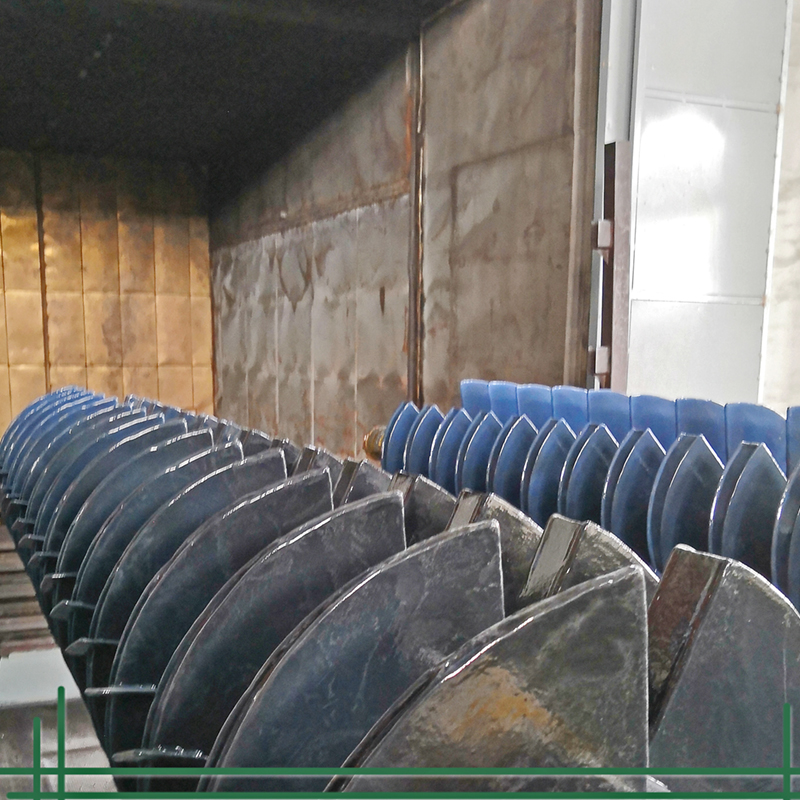
As a key component on the upper part of the reactor body, the reactor head is exposed to various corrosive materials, high-temperature steam and volatile reaction gases for a long time. Medium tends to accumulate on the curved surface of the head, gradually eroding the metal substrate. With PFA anti-corrosion coating applied by spraying, the reactor head forms a continuous and dense protective layer on the curved surface via melt spraying technology. It isolates the metal substrate from corrosive media. The coating maintains stable morphology under alternating high and low temperature environments and is suitable for batch intermittent synthesis production of multiple highly corrosive materials.
Synthesis of hydrofluoric acid-containing materials is a typical application condition. Such media feature strong penetration capacity and corrode ordinary stainless steel rapidly. The reaction is accompanied by temperature rise, which imposes requirements on penetration resistance of the head protective layer. The PFA coating can withstand continuous erosion from hydrofluoric acid. After full spraying on the curved reactor head, weak protection points at welds and corners are eliminated. Condensed vapor from the reaction adheres to the inner wall of the head without direct contact with the metal substrate. It fits the synthesis process of fluoride salts and fluorine-containing intermediates and supports the full production workflow including feeding, reaction and cooling.
It is also applicable to material synthesis under high-temperature strong acid systems. Mixed media of concentrated hydrochloric acid and nitric acid volatilize to form acidic steam under heating conditions, which condenses and accumulates on the inner surface of the head and causes pitting corrosion during long-term operation. The PFA coating sprayed on the curved surface of the head features high density to block penetration of acidic media. It will not crack or peel under temperature fluctuations during reactions. This full set of protection solution can be used for synthesis of various inorganic acid salts to enable continuous batch operation of production lines and extend equipment maintenance cycles.
Synthesis of highly corrosive intermediates for pharmaceutical API: besides corrosive properties, material purity must be controlled to prevent metal ion leaching. During reactions, the inner wall of the head contacts reaction reagents; dissolved metal ions will compromise material purity. After spraying PFA anti-corrosion coating, an inert protective surface is formed on the inner wall of the head to reduce metal element migration into the material system. The coating surface resists material adhesion, simplifying cleaning after batch production and lowering cross-contamination risks between different batches. It is suitable for alternating synthesis of multiple types of pharmaceutical intermediates.
Synthesis of new energy lithium raw materials: some lithium salt preparation processes adopt highly corrosive halide systems under sealed high-temperature conditions. The head suffers from both medium corrosion and pressure variation. The PFA coating is uniformly formed on the curved surface of the head, resisting thermal expansion and contraction caused by temperature change without coating peeling off, and blocking halide media from corroding the substrate. This spraying process can be matched for new reactor manufacturing or anti-corrosion retrofitting of old reactor heads to reduce equipment replacement costs.
Synthesis of strong oxidation systems for pesticide intermediates. The reaction system contains strong oxidants which cause oxidative corrosion upon contact with metal surfaces, and volatile reactants easily adhere to the top of the head. The PFA anti-corrosion coating sprayed on the reactor head tolerates long-term exposure to strong oxidizing media, leaving no exposed metal area on the curved surface. Material residues can be easily rinsed during production downtime. The coating property remains unaffected when manufacturers switch between different formula materials, adapting to small-batch and multi-formula synthesis mode of pesticide intermediates.
Leaching and synthesis in hydrometallurgy: leachate contains mixed corrosive components of acids and alkalis. The top reactor head is continuously exposed to corrosive steam, and conventional anti-corrosion treatments cannot provide long-lasting protection. The PFA coating can fully cover the curved surface of the head and flange corners to resist continuous attack from mixed corrosive media and retain protective performance during intermittent leaching production. It is suitable for anti-corrosion coating construction on reactor heads supporting non-ferrous metal hydrometallurgical extraction.

 Service hotline:0512-69211270
 Company address:1188 CUIZHOU Road, Lili Town, Wujiang District, Suzhou
 contacts:Deng Guangcai 13912602396
 contacts:Long Yanqiao 15995489385

Wechat applet

Scan and add wechat
 CN
 EN


 Add wechat
 Contact us
 Telephone consultation