
Adhering to quality is the life of an enterprise
 Service hotline:
 Wechat number:wechat number



 National Service Hotline
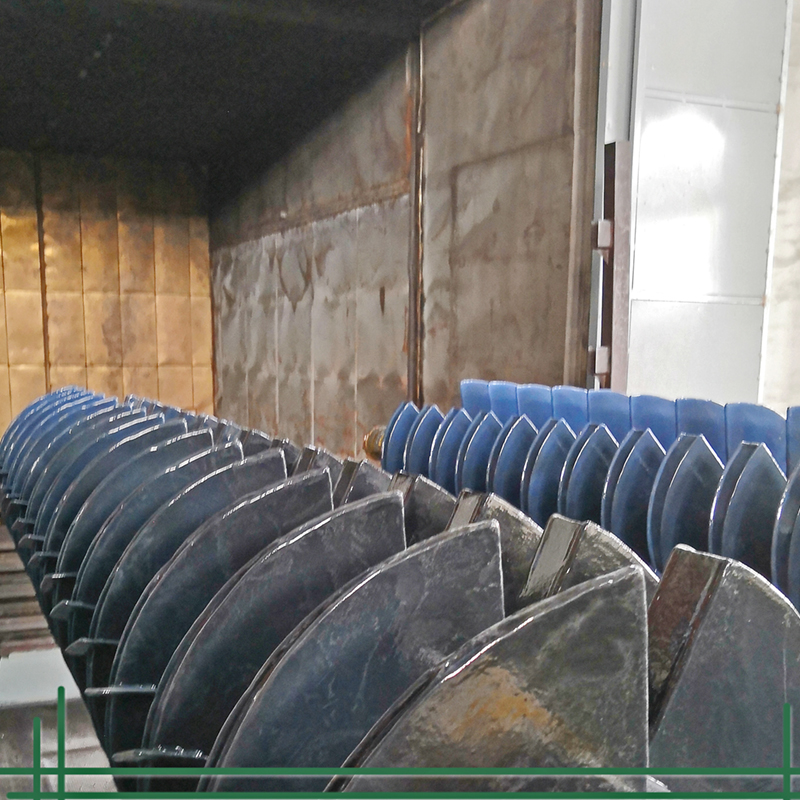
Alumina coating spraying on screw shafts is a thermal spray protection process for component surfaces. An alumina ceramic protective layer is formed on the substrate of the conveyor screw shaft to separate the substrate from direct contact with conveyed materials and reduce wear caused by continuous friction of granular materials. Firmly bonded to the base metal, the coating resists erosion from solid particle scouring and mild corrosive media, suitable for surface strengthening of various powder and granular material conveying equipment. The coated screw shafts can operate in continuous conveying lines, lowering component replacement frequency and minimizing production loss from equipment downtime and maintenance.
The alumina coating inherits the wear-resistant properties of ceramic materials. When materials slide and scour inside the screw trough, the coating buffers scratches on the shaft surface from hard particles. Its dense structure prevents partial media from penetrating the substrate and slows corrosion of the metal base by corrosive components in materials. Spraying can serve as pre-protection for newly manufactured screw shafts or repair worn old shafts. The restored shafts can be put back into production to cut procurement costs for new parts.
Mine powder conveying is its primary application. Crushed ore powder contains hard particles that continuously scour the screw surface during conveying. Ordinary metal shafts develop grooves and peeling after long operation. After alumina coating spraying, the outer protective layer bears particle erosion and protects the inner metal substrate, extending service life under ore conveying conditions. It prolongs overhaul cycles and reduces on-site screw disassembly and installation workload.
It also applies to building material powder conveying. Materials such as cement, lime and kaolin contain particles that continuously rub against screw shafts inside enclosed conveying pipelines. The alumina coating withstands persistent powder abrasion and slows shaft wear. Some building materials are weakly alkaline; the coating acts as a barrier to limit contact between materials and metal substrates and mitigate corrosion, fitting continuous conveying lines in building material plants.
In chemical powder conveying lines, many materials are mildly corrosive. Ordinary steel screw shafts tend to rust after long exposure, and rust flakes may mix into powders and compromise material purity. The alumina coating forms a barrier preventing direct contact between materials and the substrate and reduces contamination by metal debris. Coating thickness can be customized according to screw dimensions and wear zones, with targeted spraying on heavily stressed screw flights.
For grain processing conveying, grain and coarse cereal particles repeatedly rub the screw shaft during transport, and fine gravel mixed in grains scratches metal surfaces. The alumina coating resists scratches from particle friction and reduces metal debris shedding to avoid contaminating grain products. Subject to fluctuating humidity in grain workshops, the coating also protects screw substrates from moisture and suppresses rust formation.
This surface treatment process is also adopted for solid waste conveying equipment. Solid waste has complex composition mixed with hard debris that causes severe scouring on screw shafts. Worn old screws with grooves can be sent back for spray repair instead of full replacement. The repaired screws can be reassembled to restore conveying capacity and reduce maintenance material costs.
Before spraying, the screw shaft surface undergoes sandblasting roughening to improve bonding between coating and substrate. Post-spray finishing ensures compliance with assembly dimensional requirements. No excessive protrusions form on coated screw flights, so material flow will not be affected.
This full process adapts to screw shafts of all sizes, ranging from small test conveying equipment to high-capacity industrial conveyor screws. Customers may choose pre-coating for new parts or return old components for repair based on maintenance schedules. Once the coating is formed, routine inspection of surface condition is sufficient without complicated maintenance, suiting long-term continuous operation of all powder and granular conveying equipment.

 Service hotline:0512-69211270
 Company address:1188 CUIZHOU Road, Lili Town, Wujiang District, Suzhou
 contacts:Deng Guangcai 13912602396
 contacts:Long Yanqiao 15995489385

Wechat applet

Scan and add wechat
 CN
 EN
 Add wechat
 Contact us
 Telephone consultation