Welcome to Suzhou Xinrongfa Metal Products Co., Ltd.
CN EN

Adhering to quality is the life of an enterprise

Coating spraying of Teflon, tungsten carbide and alumina

Service hotline:

15995489385

+ Wechat number:wechat number

Your location: Home > Information dynamics > Industry dynamics

Recommended products

National Service Hotline

15995489385

ETFE Coating for Pharmaceutical Tanks | Anti-corrosion Lining for Pharmaceutical Reaction Vessels

Source:www.xinrongfa.cn      Release date: 2026年09月28日
Information summary:During pharmaceutical and chemical production, various reaction, synthesis and purification processes come into contact with a wide range of chemical media. Many raw materials and solvents are corrosive. When metal tanks operate under such conditions for extended periods, their inner walls are vulnerable to medium attack, resulting in rusting and surface damage.

      During pharmaceutical and chemical production, various reaction, synthesis and purification processes come into contact with a wide range of chemical media. Many raw materials and solvents are corrosive. When metal tanks operate under such conditions for extended periods, their inner walls are vulnerable to medium attack, resulting in rusting and surface damage. This impairs the storage and reaction of production materials and raises costs for equipment inspection and replacement. Conventional anti-corrosion coatings cannot withstand the stringent operating environment of the pharmaceutical industry; some coating materials suffer peeling and leaching, failing to meet container requirements for pharmaceutical manufacturing. Applied to pharmaceutical tanks, the ETFE coating process creates a stable anti-corrosion lining for pharmaceutical reaction vessels, suitable for equipment retrofits and new machine matching projects for reaction tanks and storage tanks in pharmaceutical workshops.

      ETFE is a fluorine-based polymer material. Thanks to its stable chemical properties, it resists attack by most acids, alkalis and organic solvents and maintains stable performance under pharmaceutical and chemical reaction conditions. The ETFE material is sprayed onto the inner wall of metal tanks to form a continuous protective film on the substrate surface. This isolates the metal substrate from chemical materials inside the tank, blocks medium corrosion of the tank body, extends the service life of pharmaceutical tanks and minimizes production downtime caused by equipment replacement.

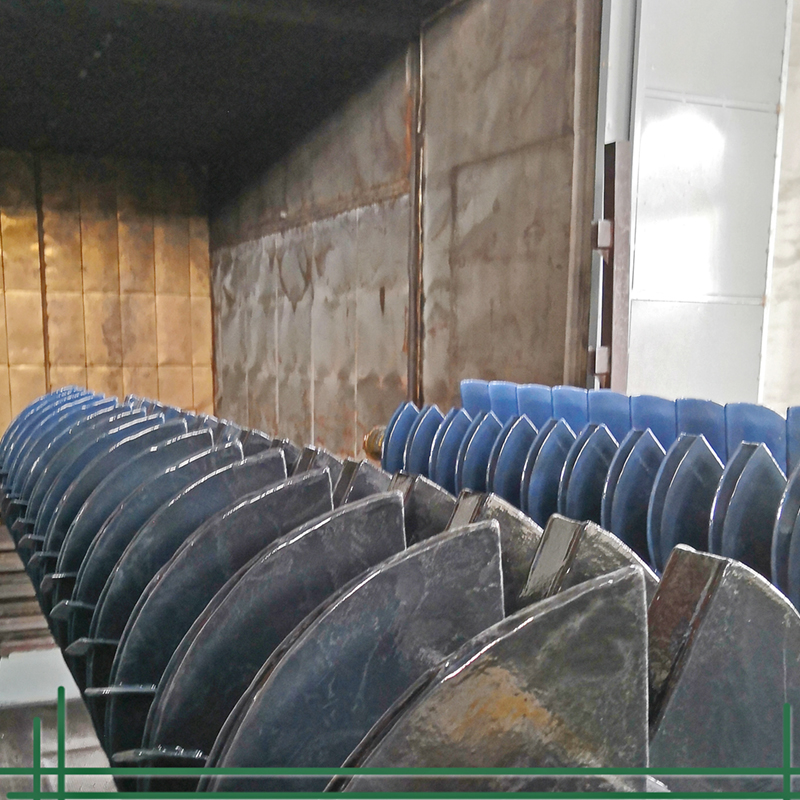
      ETFE coating application for pharmaceutical tanks requires a complete set of surface preparation and spraying procedures. In the pre-construction stage, the inner wall of the tank substrate is ground and cleaned to remove oxide layers, oil stains and impurities on the metal surface, creating a proper base for coating adhesion. Special spraying equipment is then used to apply multiple layers of ETFE material onto the tank interior, followed by high-temperature melting and curing. This achieves strong bonding between the coating and metal substrate and reduces the risk of coating blistering and peeling. Coating coverage can also be achieved on structurally complex areas such as flanges, corners and nozzles to minimize unprotected local zones.

      Pharmaceutical production imposes strict requirements on leaching control for container inner surfaces. The cured ETFE coating barely leaches impurities and does not react with pharmaceutical raw materials inside the tank, lowering the risk of material contamination. It is suitable for processes including API synthesis, formulation preparation and intermediate material storage. The coating surface has a low friction coefficient, leaving less material residue after reaction and circulation inside the tank. Tank cleaning becomes easier, reducing the chance of cross-contamination between batches and accommodating workshop production with alternating types of pharmaceutical raw materials.

      This process applies to pharmaceutical reaction tanks, mixing tanks and liquid storage tanks of various specifications. ETFE spraying can be carried out for both new tank fabrication and lining renovation of aged equipment. Spraying plans can be designed according to tank dimensions, structural forms and on-site working conditions of customers. The service covers round tanks of all volumes and reaction vessels with flange connections. Once formed, the coating can withstand temperature fluctuations within a certain range, adapting to heating and cooling cycles during pharmaceutical reactions.

      Anti-corrosion treatment of equipment is a critical part of stable production line operation in the pharmaceutical and chemical industry. Traditional rubber lining and ordinary coating materials suffer from narrow applicable temperature ranges and limited resistance to different media. In contrast, ETFE sprayed linings tolerate a broader spectrum of corrosive media and deliver protective performance in many highly corrosive pharmaceutical production scenarios.

      The full ETFE spraying service includes substrate pretreatment, coating application, curing and conditioning. After construction, the coating is inspected to verify film continuity. Drawing on mature fluoroplastic spraying experience, we can undertake batch ETFE coating projects for pharmaceutical tanks, providing anti-corrosion lining processing for reaction vessels of pharmaceutical manufacturers and helping pharmaceutical and chemical equipment cope with complex production conditions.