
Adhering to quality is the life of an enterprise
 Service hotline:
 Wechat number:wechat number



 National Service Hotline
In petroleum extraction and gathering‑transmission operations, valve‑ring components of wellhead valve assemblies, pipeline control valves, throttle valves and other equipment are immersed in complex oil‑gas media for long periods. Crude oil, formation sewage and mixed oil‑gas fluids contain sulfides, salts, acids and alkalis. When ordinary metal valve rings come into direct contact with such media, their surfaces gradually suffer oxidation, pitting corrosion and rusting. Once the valve‑ring substrate is eroded, pits, gaps and irregular textures form on the sealing face, resulting in poor valve sealing, medium leakage and pressure relief. This forces equipment shutdown for maintenance and part replacement, raising on‑site operation pressure and material consumption for oilfields. Spraying PTFE protective coating onto petroleum‑machinery valve rings forms a dense barrier layer over the metal substrate, blocking direct contact between corrosive media and the base material and improving the service performance of valve rings under harsh working conditions.
The cured PTFE coating features a dense structure free of capillary pores, fully covering inner and outer surfaces, sealing end faces and corner gaps of valve rings. Corrosive components in oilfield media cannot penetrate the coating to reach the metal substrate, providing physical isolation of steel against acids, alkalis, salt mist and sulfides. For uncoated standard valve rings, media seep gradually along micro‑textures on metal surfaces and generate corrosion layers from outside in. Corroded areas keep expanding over long‑term operation and damage the overall structure and sealing flatness of valve rings. Coated valve rings maintain an intact barrier surface to resist persistent attack from various corrosive media.
Significant temperature fluctuations exist in oilfield downhole and wellhead conditions. Thermal expansion and contraction occur repeatedly on valve‑ring components due to day‑night cycles and start‑stop operations. Conventional protective coatings show poor compliance and tend to blister, crack and peel after repeated deformation, losing protective functions. PTFE coating delivers excellent deformation follow‑up performance and expands or contracts synchronously with the metal substrate. No cracking or delamination takes place under alternating temperatures, so isolation protection for the substrate is sustained to adapt to all‑weather field oilfield operations.
Apart from chemical corrosion, sediment and solid particles mixed in oil‑gas media continuously scour valve‑ring surfaces, abrading original protective layers and accelerating substrate exposure and corrosion. With a low friction coefficient and smooth surface, the PTFE coating allows solid particles to slide off quickly when flowing across contact surfaces, reducing surface wear caused by particle accumulation and persistent scouring. Slow‑wearing, the coating covers the metal substrate for an extended period and prevents substrate exposure to medium corrosion. It greatly prolongs valve‑ring service life and cuts frequent part replacement and valve disassembly‑assembly work in oilfields.
The spraying process consists of multiple steps. The valve‑ring substrate is first ground, degreased and derusted to ensure a clean surface. Special spraying equipment applies uniform coating material, which cures at high temperature to form tight bonding and stable adhesion with the substrate. No large‑area or local flaking occurs during regular valve opening‑closing and sealing compression. The coating stays firmly attached to the valve‑ring matrix and maintains isolation protection. This complete spraying process is compatible with petroleum‑machinery valve rings of various specifications and meets assembly and operation standards of different valves.
PTFE‑sprayed valve rings are applicable to multiple oilfield working conditions including gathering‑transmission, water injection and oil production, and cope with complex operating environments combining humidity, corrosion and scouring. The valve‑ring substrate remains under stable long‑term isolation and avoids structural damage and sealing failure induced by medium erosion. Valves maintain reliable sealing and stable operation, fit long‑duration non‑stop continuous oilfield production, and reduce overall on‑site equipment maintenance costs.

 Service hotline:0512-69211270
 Company address:1188 CUIZHOU Road, Lili Town, Wujiang District, Suzhou
 contacts:Deng Guangcai 13912602396
 contacts:Long Yanqiao 15995489385

Wechat applet

Scan and add wechat
 CN
CN EN
EN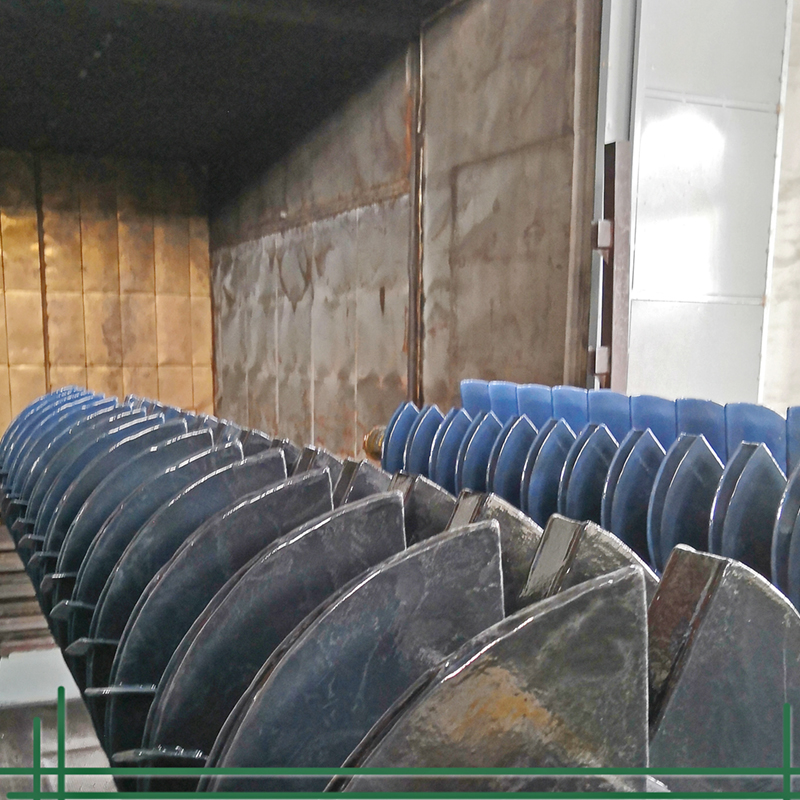
 Add wechat
 Contact us
 Telephone consultation